Joshua Jackson
Lost and FoundJoshua Jackson is introduced as a farmer whose first encounter with Eve Waters combines physical attraction, practical competence, and immediate friction. After Eve’s truck collides with the corner of his vehicle, Joshua is stranded with a baby goat, a nearly dead phone, and an urgent delivery to Heather’s Forge. The episode presents him as more than a picturesque stranger: he is resourceful, socially embedded, generous toward his community, and responsible for work that has materially helped local farmers.
Identity and Introduction
Joshua first appears beside the roadside collision, where Eve asks his name and he identifies himself simply as Joshua. His handshake emphasizes the contrast between them: his palm is calloused, marking him as someone accustomed to physical labor rather than merely performing a rural persona. He is also described through Eve’s immediate response to him as exceptionally handsome, with tanned skin, chiseled features, crystal-blue eyes, and a smile powerful enough to interrupt her anger. The attraction does not erase the inconvenience of the situation; instead, it makes Eve suspicious of her own judgment and aware that she has invited an unknown man into her vehicle.
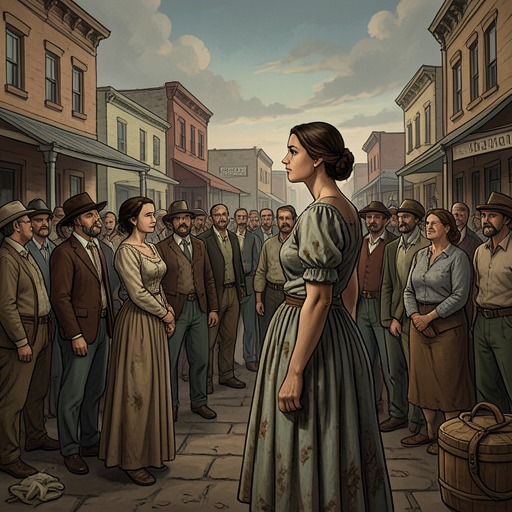
The name Joshua Jackson acquires local weight when Eve meets George, who identifies Joshua as his pal and describes him as the owner of a ranch just outside Heather’s Forge. George praises Joshua as someone who has done more for the town than anyone else and insists that residents will not soon forget his contributions. Joshua is embarrassed by this public admiration and tries to dismiss George’s enthusiasm as exaggeration, but the exchange establishes that his importance is recognized by the community rather than asserted by Joshua himself.
The Roadside Encounter and Its Practical Stakes
Joshua’s immediate problem is the baby goat he is taking to Heather’s Forge for a girl’s birthday. He explains that he had been expected an hour earlier, had rushed out without checking the gas or charging his phone, and now needs both transportation and fuel. His call to George secures assistance with several gallons of gas, while his inspection of Eve’s truck confirms that the damage is limited and can probably be repaired. Joshua also notices that the truck already bears other dents, turning mechanical observation into teasing that Eve initially resents.
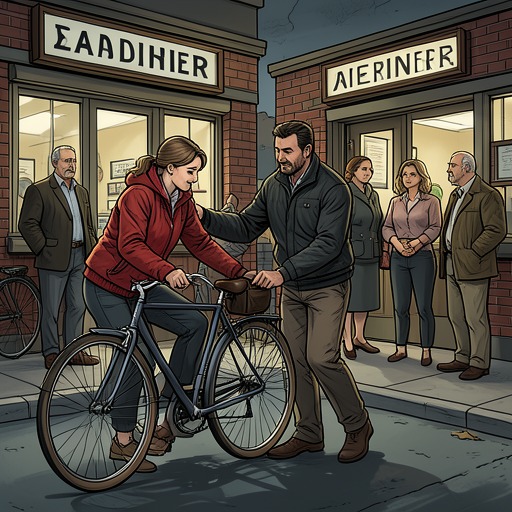
When Joshua tells Eve that his restored truck will require repairs to its dented bumper and broken gas gauge, he converts the accident into a repayment arrangement: Eve can drive him and the goat to Heather’s Forge and help him deal with the stranded vehicle. Eve agrees before she can reconsider, offering space in the back of her truck and a canopy for the goat. Joshua accepts her assistance without ceremony, and the two quickly establish a cooperative plan: he will retrieve Billy the Kid, while Eve will get the water. The practical division of tasks softens the dangerous uncertainty of the encounter, even though Eve still recognizes that the handsome stranger could theoretically be an ax murderer.
The goat remains a concrete reason for continued contact. Joshua steps back immediately when their charged eye contact threatens to overtake the situation, and he returns attention to the animal. The gesture makes the attraction reciprocal without allowing it to become the only basis of the interaction. In narrative terms, the roadside accident changes Eve’s position from an isolated traveler trying to reach town into Joshua’s temporary partner in a rescue and delivery effort.
Community Reputation and Relationship with Eve Waters
Joshua’s connection to Heather’s Forge is mediated through people who know him well. George’s admiration is so emphatic that it embarrasses Joshua, while Mrs. Beaumont’s arrival demonstrates the social authority of the town’s older residents. When she asks Eve whether she is alone, Joshua attempts to move the group along, suggesting an instinct to protect the newcomer from intrusive small-town scrutiny as well as a desire to prevent the conversation from becoming more personal than Eve wants.
Joshua’s invitation to Eve extends the practical arrangement into hospitality. Once Eve finds her damaged truck, Joshua points out that his ranch is only about a mile away and offers to let her follow him there. When she suspects that the invitation is simply another demand for repayment, he answers with playful self-mockery before making the offer more plainly: he will cook dinner, and she can stay the night rather than face the long drive back to town. He adds that the ranch has several guest rooms, each with an en suite bathroom and Jacuzzi. The invitation is therefore framed as safety and comfort, but its flirtatious tone also marks a shift from accidental obligation toward deliberate intimacy.
Eve’s response remains cautious. She has recently moved from New York and is alone, while Joshua is an unfamiliar man whose charm could conceal risk. Yet his conduct repeatedly gives her reasons to continue: he arranges gas, evaluates the truck damage, remembers the goat’s delivery, and offers accommodation rather than abandoning her to the roadside. Their developing relationship is built through these acts of practical care, with attraction operating alongside negotiation and suspicion rather than replacing them.
Work, Invention, and Personal History
Joshua’s rural identity includes intellectual and technological work. In the kitchen, while Eve helps him with a sauce, he explains that he returned because he wanted to be a farmer and had always loved the area. He suggests that the vocation may be in his blood, linking his present to his father without reducing farming to inherited sentiment. The scene places his physical labor and emotional attachment to the land within a deliberate choice about how he wants to live.
His most significant accomplishment is an irrigation-recycling system designed for farmland. Joshua created a method that allows water used on agricultural land to be recycled, helping farmers keep crops watered during the harshest periods. He says the project grew from his father’s passion and that he ultimately built the system and obtained a patent for it. The invention gives material form to his stated desire to give back to farmers like his father. Joshua treats the achievement as ordinary and quickly redirects the conversation to carbonara, but the understatement makes the disclosure more revealing: beneath the teasing farmer persona is an inventor whose work has lasting communal consequences.
Narrative Function and Emerging Arc
Joshua serves as the unexpected counterpart to Eve’s post-divorce uncertainty. Her damaged truck is described as one of the few dependable things in her life, yet the collision with Joshua turns that symbol of reliability into the mechanism of a new dependence. He arrives with a goat, a restored truck needing repair, and a request for help; by the time he invites Eve to his ranch, the encounter has become a chain of reciprocal obligations that neither character fully planned.
His characterization balances recognizable romantic appeal with evidence of depth. He is instantly legible as the attractive farmer, but the story complicates that surface through his local reputation, his responsibility toward Billy the Kid, his generosity to the town, and his patented water system. Joshua’s most important contribution to the plot is therefore not simply that he attracts Eve. He creates a believable bridge between disruption and hospitality, between a roadside mishap and the possibility of a relationship grounded in work, community, and mutual assistance.